The paper by Arai Takao and Hiroyasu Inoue was published in PLOS One on September 9, 2026.
Finding commercially promising inventions among the many patents held by companies and universities requires costly expert review. Licensing provides evidence of commercial value. Predicting which patents are likely to be licensed can help prioritize candidates for closer assessment and technology transfer.
We compared four methods using 624,129 US patents, predicting licensing within one, three, and five years. Because a patent that has not yet been licensed may be licensed later, we combined deep learning with survival analysis, which accounts for the time until a licensing event.
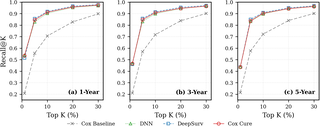
The relatively simple DeepSurv model performed comparably to more complex alternatives. In this evaluation, selecting the top-ranked 10% captured about 91% of licensed patents. The findings suggest that learning informative patent features matters more than adding model complexity, offering practical guidance for screening large patent portfolios.